

Our Story · Since 1986
From a Midsummer song to a national landmark.
How a small Iowa town founded by Swedish immigrants turned a summer festival into the Swedish American Museum.
Key facts
- Name
- Swedish American Museum and Historical Society (also known as the Swedish Heritage Museum)
- Location
- 107 James Ave, Swedesburg, Henry County, Iowa — about 9 miles north of Mount Pleasant, just off U.S. Highway 218
- Founded by
- The Swedish Heritage Society, formed in 1986 by Louise and Clarence Unkrich and fellow community members
- Museum opened
- 1991
- Historic status
- Listed on the National Register of Historic Places as the Swedesburg Historic Commercial District (July 15, 1999)
- Longtime director
- Louise Unkrich — sole director for 33 years
- Known for
- Iowa's largest Dala horse, the 14-foot “Ole”; the 1875 stuga (lake house) buildings; the Huckster wagon; the Scandinavian gift shop
- Operated by
- Volunteers of a nonprofit organization celebrating Swedish heritage and history in Swedesburg, Iowa
Last updated: September 2026
Prologue — “Fit only for ducks”
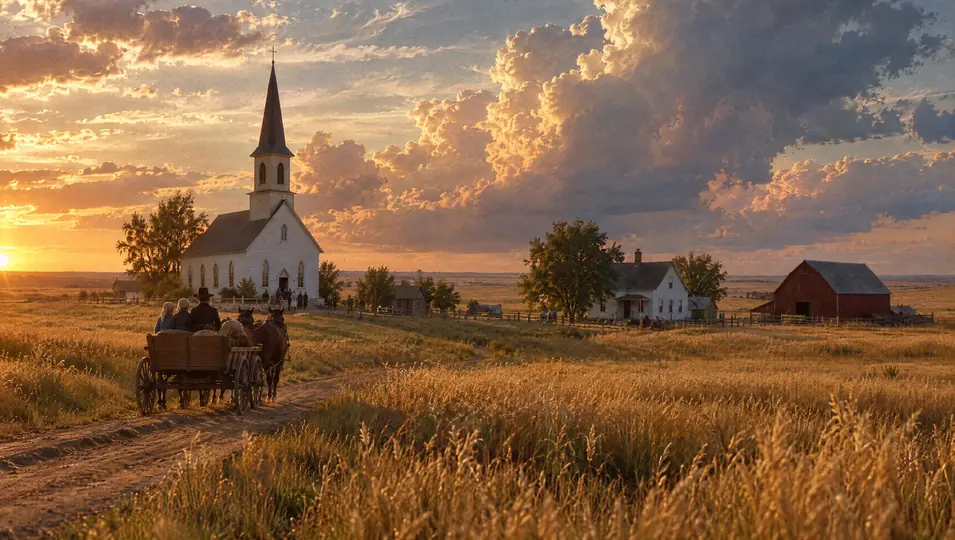
When a surveyor crossed Henry County in the early 1800s, he wrote that much of the marshy tallgrass prairie was “fit only for ducks.” The Swedish families who came next saw something else. Swedish immigrants first settled in neighboring Jefferson County in the 1840s — among the earliest Swedish settlements in the Midwest — and in the 1860s a new wave put down roots in northern Henry County. They drained the swampy land with hand-dug tile lines, plowed it into farms, and built a town: Swedesburg.


1875 — Main street takes shape
In November 1875, Samuel L. White bought Lot 6 of Block 1 in the new town plat for $80 and became a merchant; his general store was completed by 1881. Next door, Charles E. Bergh opened a tin shop and hardware store in 1875. Upstairs, in rooms no bigger than an attic, Charles and his wife Caroline raised their children — Caroline writing articles for the local newspaper while Charles ran the store below. There was no electricity and no running water.
1928 — The Farmers Union Exchange
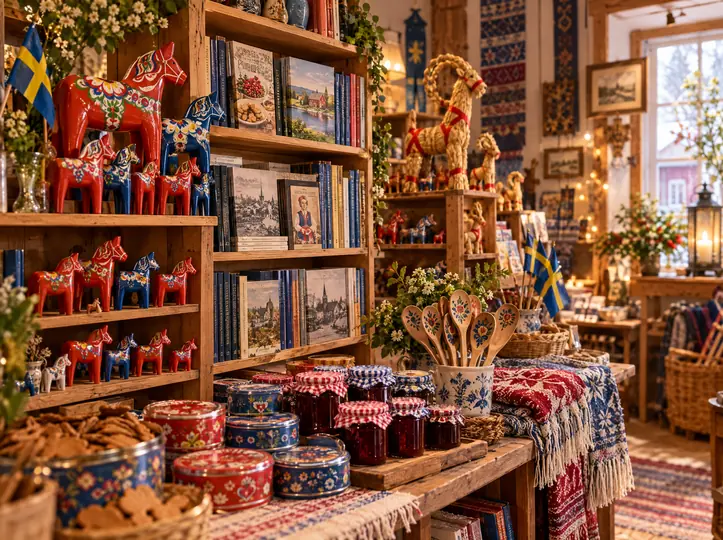
In 1928, second-generation Swedish farmers built the Farmers Union Exchange, a frame store with a “boomtown” front. The older White store was joined to it for extra space, and the Bergh building became storage. For nearly half a century it was the heart of trade in Swedesburg, until it closed in 1976.
Then & now · 125 years
From general store to museum.
In the fall of 1901, John and Carrie Anderson kept shop at the Anderson & Nelson general store in Swedesburg. The store later moved its business — building and all — north to Olds, Iowa. In 1928, local farmers formed the Farmers Union Exchange on Swedesburg's main street, and it served the community until 1976. Today its buildings are home to the Swedish American Museum.

125 years

After the war — A Midsummer tradition
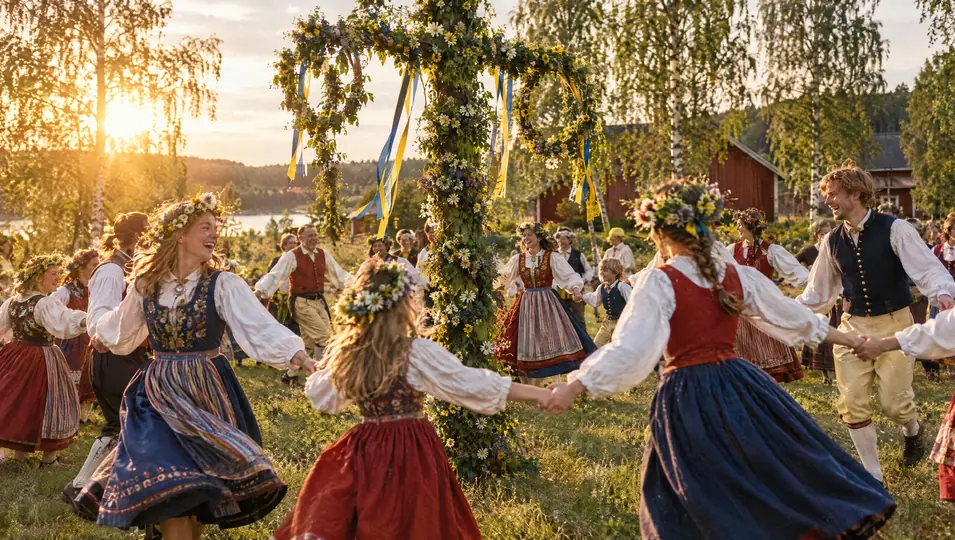
Louise Tolander, born in 1924, was the great-granddaughter of Swedish immigrants who came in the 1860s. During World War II she was a real “Rosie the Riveter,” riveting ailerons on the first B-29 Superfortress bombers at the Glenn L. Martin plant in Omaha. In 1944 she married her high school sweetheart, Navy Ensign Clarence Unkrich, at the Swedesburg Lutheran Church. After Clarence returned from the Pacific, the couple farmed — and together they started Swedesburg's annual Midsummer Fest, singing and dancing around the maypole to celebrate the summer solstice in the Swedish tradition.

1986 — The Swedish Heritage Society is born
The Midsummer Fest grew into something bigger. In 1986 it led to the formation of the Swedish Heritage Society of Swedesburg, dedicated to preserving the history of this small, rural Iowa farming community. That same year began a Swedesburg tradition that continues: each December, a local high school junior with Swedish ancestry is chosen to be Lucia.
1990–1991 — A museum on Main Street
In 1990 the Swedish Heritage Society acquired the old Farmers Union Exchange together with the White store and the Bergh tin shop. In 1991 the Swedish American Museum opened its doors — with Louise Unkrich as its director, a role she would hold, as the museum's only director, for 33 years.

Given by families, built by volunteers
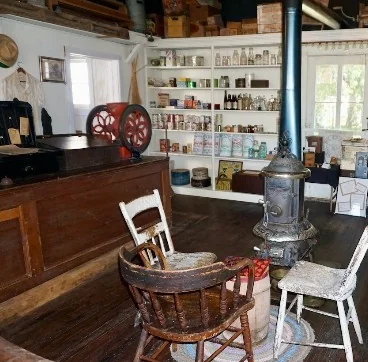
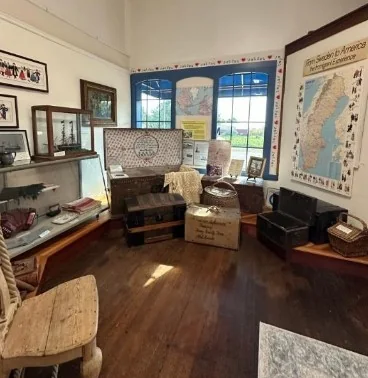
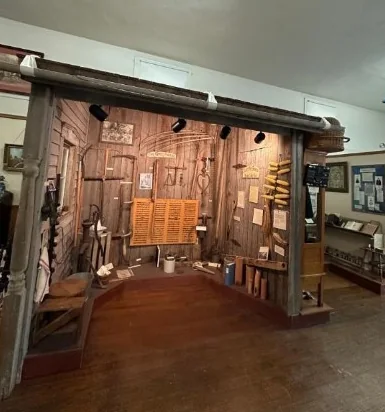
Nearly everything visitors see was donated by local residents and descendants of Swedesburg's Swedish settlers — immigrant trunks, clothing, tools, a psalmodikon, a cobbler's bench, even the ledger that tracked farm families' accounts at the general store. Volunteers rebuilt a Huckster wagon, the kind merchants drove to deliver goods to farms, which has rolled in the Old Threshers parade behind white mules. They painted the little stuga cottage with copper-mine red paint brought home from Sweden, “like so many little houses in Sweden look.” And the genealogy library holds handwritten family records and stories, with volunteers ready to help visitors trace their roots.

1999 — National recognition
On July 15, 1999, the museum's four-building complex was listed on the National Register of Historic Places as the Swedesburg Historic Commercial District — a nationally recognized piece of Swedish-American history.

A legacy that keeps growing
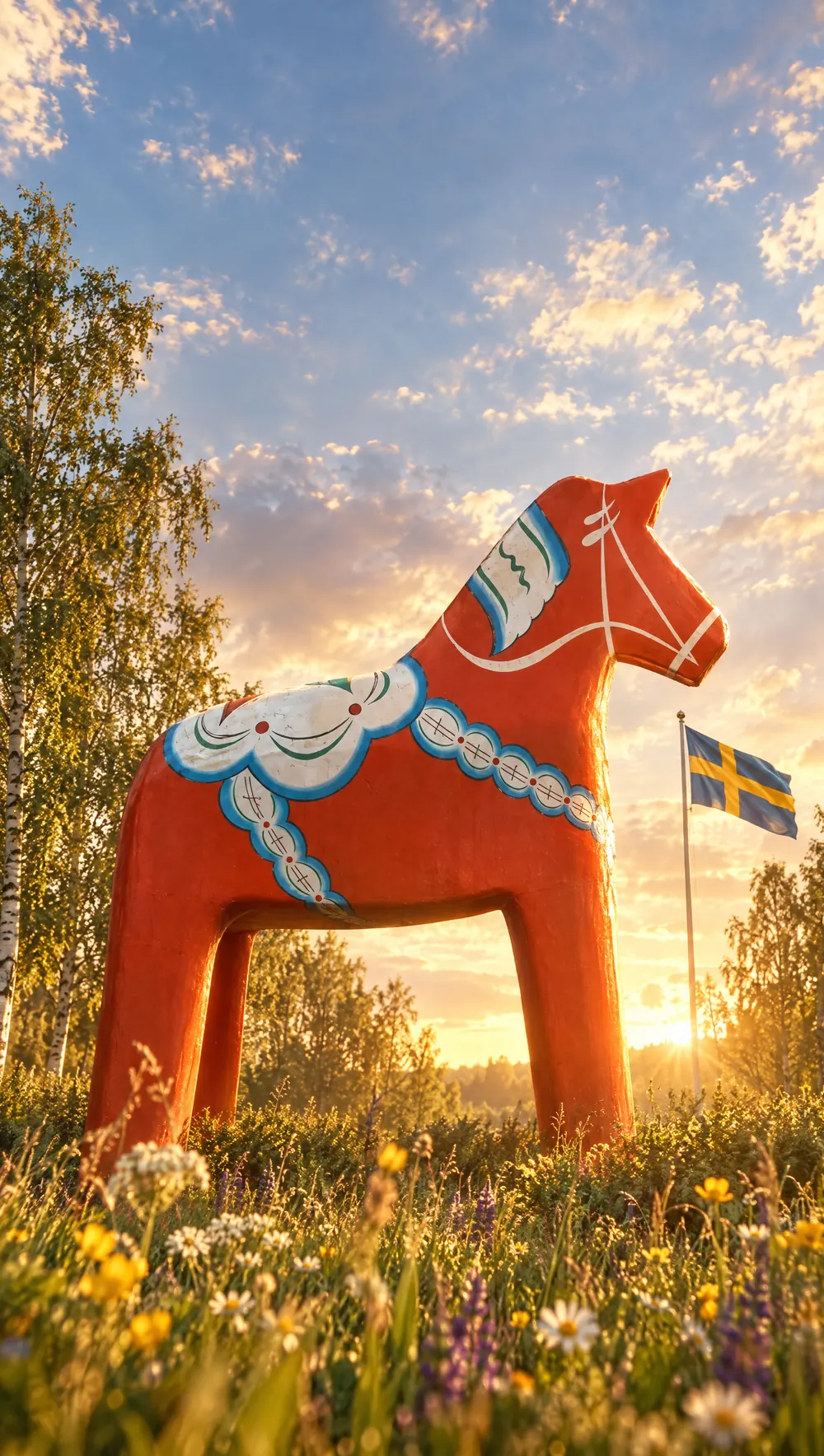
Louise received a Merit Award from the Swedish Council of America in 2007 and was named Iowan of the Day at the Iowa State Fair in 2011. She visited Sweden ten times and traced all eight of her immigrant great-grandparents. When she passed away in 2024 at the age of 99, she left behind a museum that has welcomed thousands of visitors — including more than a thousand guests from Sweden itself. Out front, the 14-foot “Ole,” Iowa's largest Dala horse, keeps watch, and a straw julbock greets travelers on Highway 218.
“We grew up with it and we think it's important to preserve.”
— Norma Lindeen, museum volunteer and gift shop manager (The Gazette, 2016)
Timeline
Swedesburg, year by year
1840s
Swedish immigrants settle neighboring Jefferson County, among the first Swedish settlements in the Midwest
1860s
Swedish families settle northern Henry County and found Swedesburg
1875
Charles E. Bergh opens his tin shop & hardware store; Samuel L. White buys his lot for $80
1881
Samuel L. White's general store is completed
1928
Second-generation Swedish farmers build the Farmers Union Exchange
1976
The Farmers Union Exchange closes
1986
The Midsummer Fest leads to the founding of the Swedish Heritage Society
1990
The Society acquires the historic main-street complex
1991
The Swedish American Museum opens, with Louise Unkrich as director
1999
Listed on the National Register of Historic Places (July 15)
2007
Louise Unkrich receives a Merit Award from the Swedish Council of America
2024
Louise Unkrich passes at 99 after 33 years as director; her legacy lives on
By the numbers
- Heritage Society founded
- 1986Heritage Society founded
- Museum opened
- 1991Museum opened
- Louise Unkrich's tenure as director
- 33 yearsLouise Unkrich's tenure as director
- historic buildings
- 4historic buildings
- visitors from Sweden
- 1,000+visitors from Sweden
Visitor figures as reported by The Gazette, 2016.
Real photographs
Inside the museum today
Sources & further reading
- National Register of Historic Places — Swedesburg Historic Commercial District (#99000829)
- Swedesburg, Iowa
- Louise Unkrich obituary, Kimzey Funeral Home (2024)
- Des Moines Register (Apr 4, 2024)
- Southeast Iowa Union (2018)
- The Gazette, “Iowa All Over: Preserving Swedish History in Swedesburg” (2016)
- Olio in Iowa
- Iowa Road Trip (2024)
- Milwaukee Journal Sentinel (2017)
Come see the story in person.
More questions? Read the FAQ or browse the gallery.